


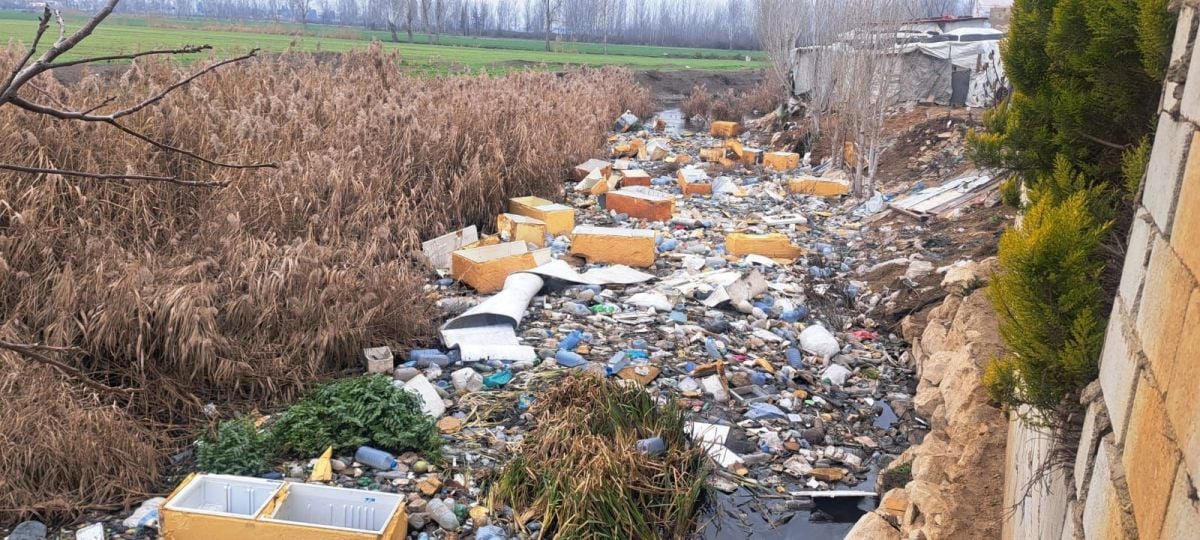
The Ghozayel watercourse, a tributary of the Litani in central Bekaa, completely covered with plastic and electronic waste from an illegal recycling industry. Photo released by the Litani Office.



The Litani National Office has denounced a severe case of pollution in the Ghozayel River in the central Bekaa, a tributary of the Litani, Lebanon’s largest river. According to the head of the organization, Sami Alawieh, large quantities of plastic and metal waste from the illegal and unregulated recycling of household appliances, particularly refrigerators, have been dumped directly into the waterway.
In a statement released Friday, Alawieh condemned what he described as “completely outrageous” behavior by “unscrupulous merchants who buy used refrigerators and other large household appliances from a well-known Lebanese brand to dismantle them for recycling and use as raw materials.” The unusable remnants, he said, are discarded without safeguards into the Ghozayel River.
Alawieh stressed “the dangerous pollution resulting from this waste, since refrigerators contain cooling oils, insulating gases and foams, some of which are hazardous chemical compounds released through haphazard dismantling.” He warned that “heavy metals and volatile compounds are released, polluting soils, waterways and groundwater,” adding that they also degrade biodiversity and enter the food chain when crops are irrigated with contaminated water.
The Litani Water Authority said the practices amount to “clear violations of existing environmental laws regarding the treatment of industrial and hazardous waste on one hand, and the protection of waterways on the other,” noting that the polluter-pays principle applies.
The statement added that legal action would target not only those directly responsible for dumping the waste, but also the industries from which the appliances originate, since they are meant to manage waste resulting from their production.
Alawieh said he had “initiated the necessary legal measures, in coordination with the investigative unit in the Bekaa, to begin prosecution against anyone involved in polluting the river, as well as the manufacturing industry if responsibility is established.”
While dramatic, the case is far from the first in the Litani basin, which has suffered from chronic pollution for decades due to industrial and municipal waste dumped along its length. The authority has previously launched numerous legal proceedings against polluters, particularly factories.
Alawieh emphasized "the dangerous pollution resulting from this waste, since refrigerators contain cooling oils, insulating gases, and foams, some of which are hazardous chemical compounds released through haphazard dismantling of these appliances." He lamented that "heavy metals and volatile compounds are released, polluting soils, waterways, and groundwater, not to mention their contribution to the degradation of biodiversity and their entry into the food chain" after crops are irrigated with the polluted water.
The Litani Water Authority reminded that these are "clear violations of existing environmental laws regarding the treatment of industrial and hazardous waste on one hand, and the protection of waterways on the other," adding that the polluter-pays principle applies to these offenders. The statement noted that legal action would not only target the direct polluters, but also the industries from which these appliances originate, as they are supposed to manage the waste resulting from their production.
On this subject, the president of the Litani Office announced that he has "initiated the necessary legal measures, in coordination with the investigative unit in the Bekaa, to begin prosecution against anyone involved in polluting the river, as well as the manufacturing industry if responsibility is established."
This pollution case, as dramatic as it may be, is far from the first in the Litani basin, a river that has suffered from endemic pollution for decades due to industrial and municipal waste dumped along its entire length. The Litani Water Authority has already taken many legal actions against polluters, particularly industrial ones.



 Désarmement du Hezbollah : négocier avec l’Iran est-il réaliste ?